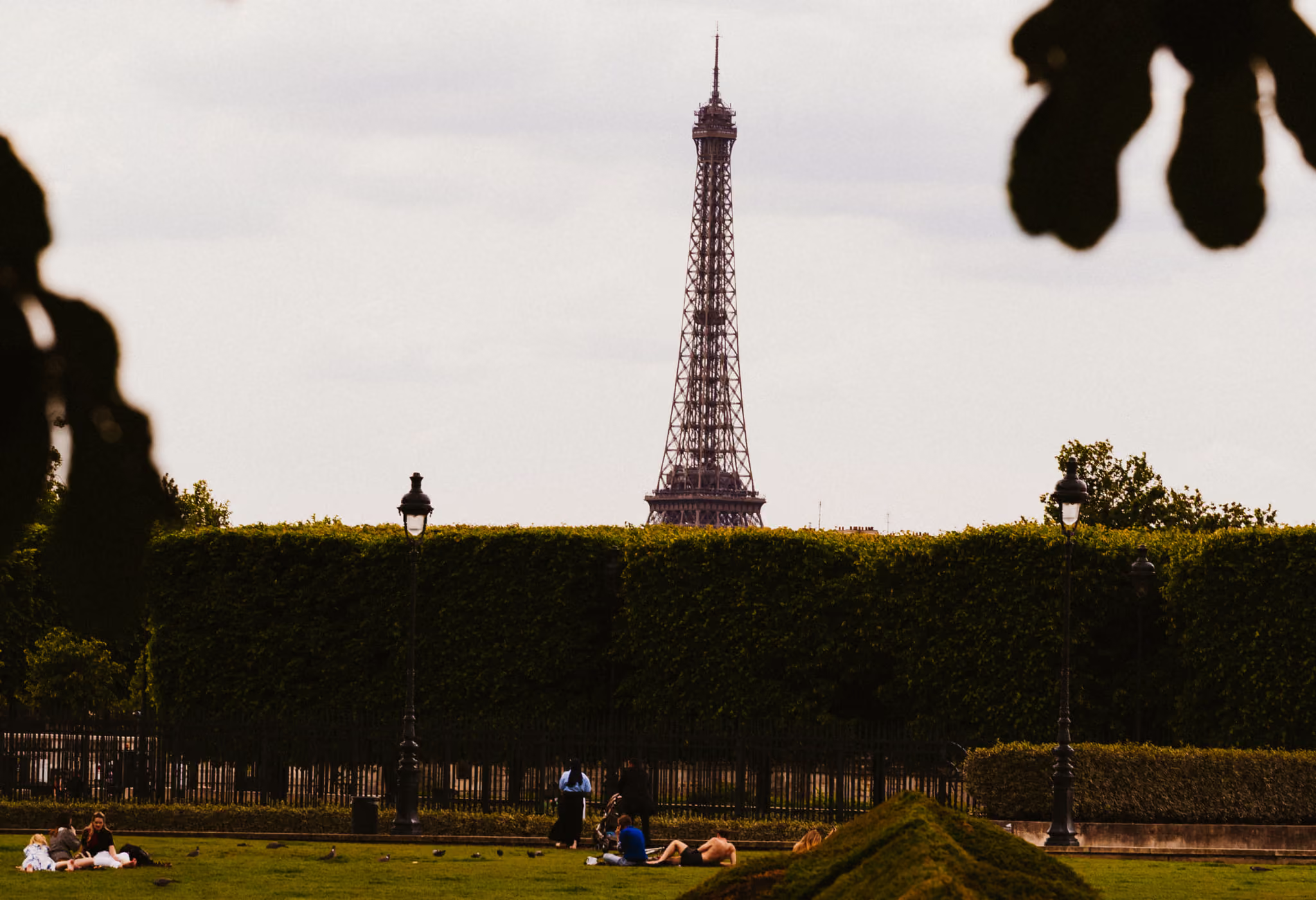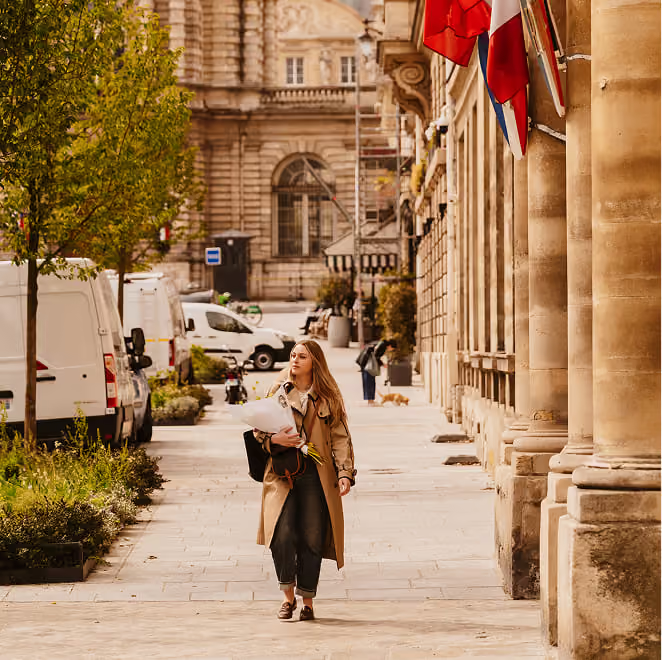

Our first Grand Pied à Terre in Paris marks a natural evolution of how we think about city living. Set on Rue de Birague, in the heart of the Marais, the apartment carries all the hallmarks of a classic Parisian address, generous proportions, tall ceilings, and a connection to the street that feels distinctly alive. Yet when we first encountered the space, much of its original character had been softened. Previous renovations had stripped back some of the architectural detail, leaving behind a cleaner, more modern shell. The bones, however, remained: a vast front room framed by large windows, original timber floors in places, and exposed beams that hinted at the building’s history. We sat down with Julie Tysseire-Torres, who led the design, to talk through the thinking behind the space, and what it means to design a Grand Pied à Terre in Paris.
The Canvas, Elevated
For Julie, the apartment’s defining moment revealed itself immediately. “It’s such an amazing space when you walk in,” she explains. “The big windows, the openness to the street, it feels very sociable, very connected. And the location… you walk through the gates of Rue de Birague and you feel so in the middle of it all.” That sense of openness became the foundation for the design. But equally important was what remained of the home’s past. “Anything we could hold on to, like the kitchen floor or the original parquet in the bedrooms, we were very clear on keeping,” she says. “It may be worn or slightly imperfect, but that’s exactly where the character comes from.”
Alongside these retained elements came the need to reintroduce character where it had been lost. And with this being our first Grand Pied à Terre, the approach required a shift. “From a Pied à Terre to a Grand Pied à Terre, we needed to elevate,” Julie explains. “The approach stays the same in terms of identity, but everything becomes more refined, the materials, the lighting, the detailing.”
That elevation is felt not through excess, but through precision. Real marble replaces stone surfaces, lighting becomes more sculptural, and furniture choices lean into recognisable, design-led brands. “The lighting was one of the main things,” she notes. “It needed to be striking. More romantic, more considered. Everything just feels a bit more elevated, a bit more special.”
There was also, from the outset, a moment of instinct that set the tone for the entire scheme. “We saw these green armchairs at Maison & Objet and immediately said, ‘We need these in Paris,’” Julie recalls. "They were one of the first pieces we locked in, everything else almost built out from there.”