

September 26, 2025
The Soul of the Marais: By Designer Julie

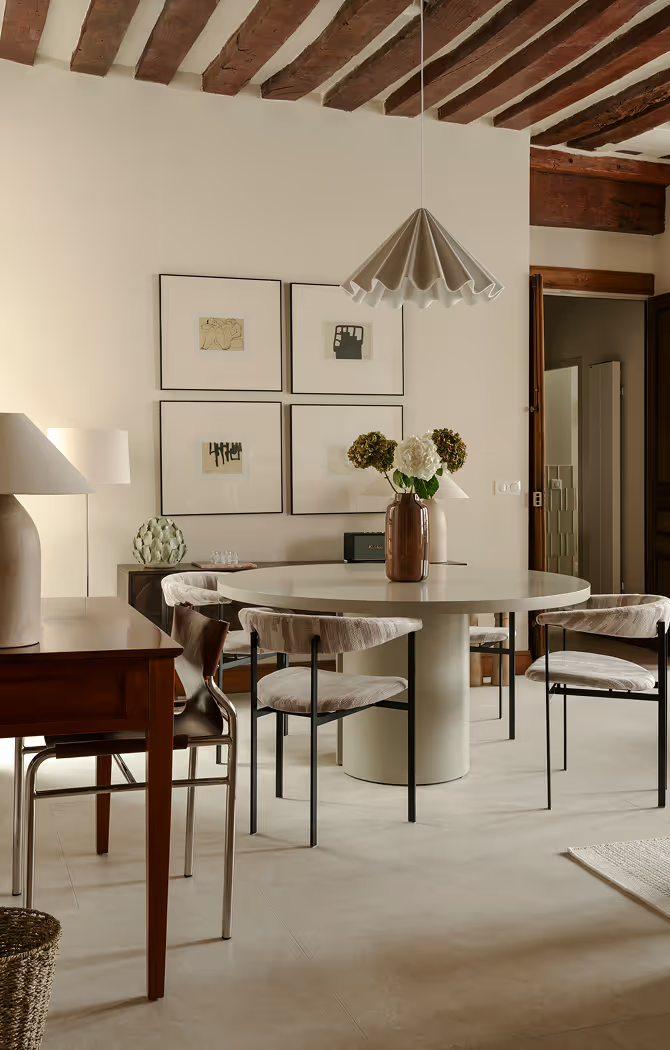
Tucked behind a quiet courtyard in the Marais, this 17th-century apartment is the kind of Parisian secret you could pass by without ever knowing it existed. Unlike the grand Haussmannian boulevards most people picture when they think of Paris, the Marais tells a different story: older, more intimate, layered with centuries of Parisian life. When interior designer Julie Tysseire-Torres first stepped inside, she felt it immediately. “That apartment was quite unique,” Julie recalls. “It had so much character still intact, the beams, the stone walls, even the shelves the previous owner, an antique dealer, had built around the fireplace. You don’t often see apartments in the Marais that remain so original. It really felt like it had its own soul.” For Julie, that soul became the starting point. Rather than impose the ornate mouldings or grandeur more typical of central Paris, the renovation was guided by a quieter principle: let the building’s history lead the design.
A Dialogue Between Time and Style
The Soul of the Building
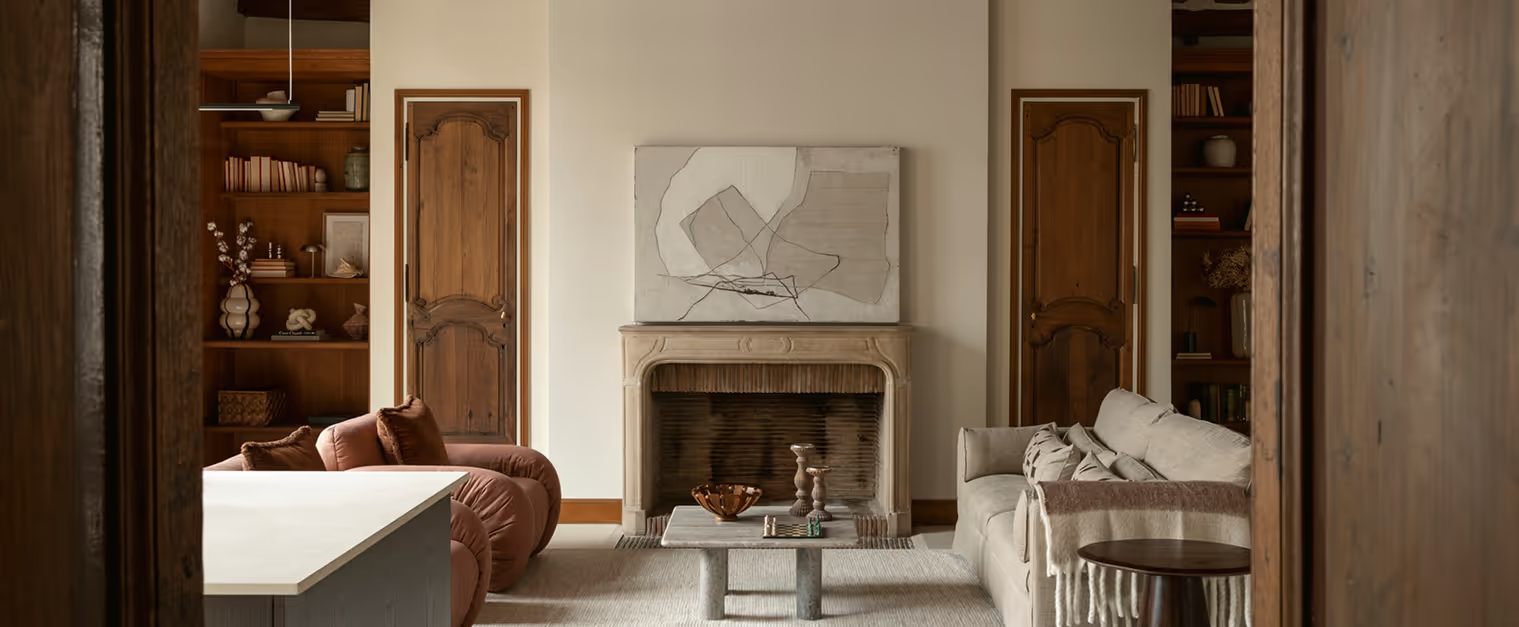
The apartment’s most striking features were the ones that spoke directly of its age: the stone fireplace with its carved surround, the brass-handled doors, the timber floors. Julie saw these not as relics to cover over, but as anchors for the entire scheme.
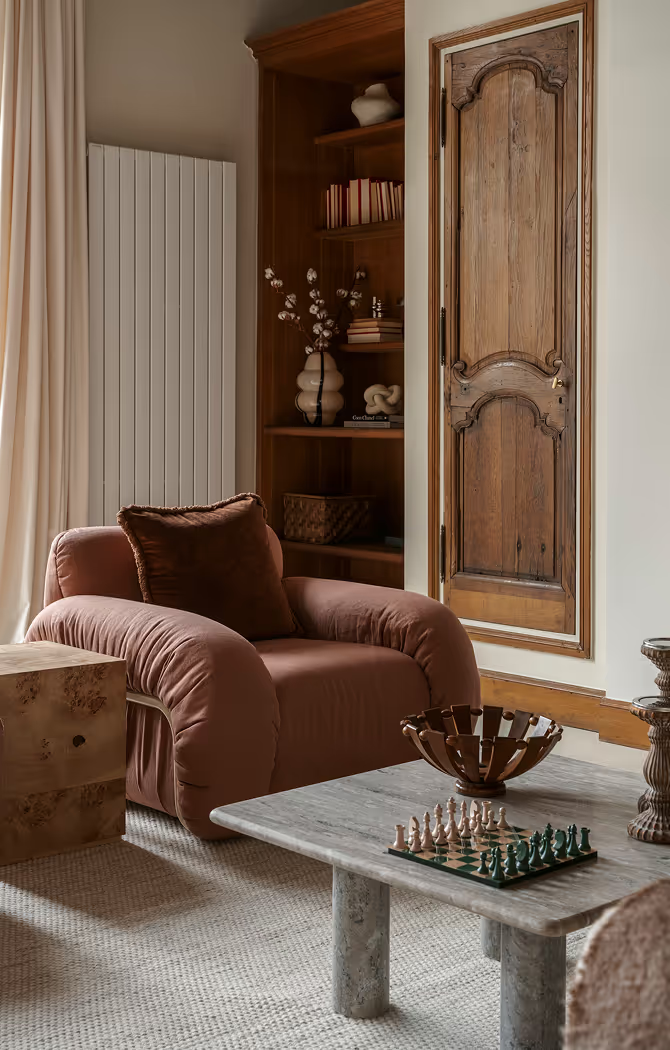
“We kept all the doors, the floors in the bedrooms, the fireplace, even the bookshelves put in by the antique dealer, as this felt part of the apartment’s story as much as the architectural features" she explains. “But we removed the vaulted ceilings that had been added later, they felt foreign to the Marais. It’s like in England: you wouldn’t put Victorian tiles in a Georgian house. You want to be true to the identity of the building.”
The result is a space that feels timeless not because it imitates Parisian clichés, but because it respects the truth of its own architecture.
Designing Through Provenance
To bring warmth and intimacy into the apartment, Julie turned to her favourite method: antique hunting. Paris is, after all, a city where history is found not just in the walls but on every market stall.
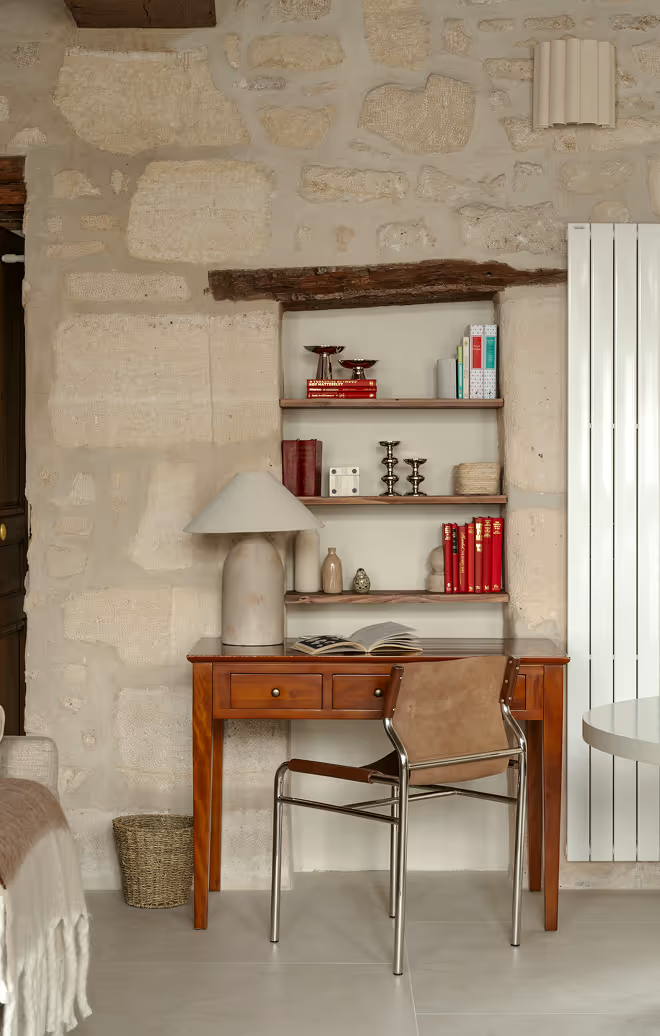
“When I go to the markets, I’m looking for pieces that feel like they could have been there forever, marble platters, old books, ornaments, fruit bowls. I found a beautiful wooden bowl with little beading detail, and a huge old seashell that sits on the shelves by the fireplace. They’re the kinds of objects that make a space feel lived in, like it’s been collected over years.”
This approach mirrors the Parisian tradition of layering interiors with found objects and heirlooms rather than relying on brand-new pieces. Each antique becomes part of the apartment’s story, contextualising it within the Marais without slipping into pastiche. It’s a reminder that when designing a home, it’s often these collected details, not shiny new purchases, that bring authenticity and depth.
Introducing Modern Touches:
Preserving history didn’t mean creating a museum piece. Julie balanced the apartment’s centuries-old bones with carefully chosen contemporary flourishes: velvet curtains, tailored headboards, sculptural lighting, and clean-lined armchairs. These pieces brought freshness without overpowering the quiet romance of the space.
“I think about form a lot,” Julie explains. “The shapes of furniture and lighting can echo the traditional architecture without copying it. A curved lamp or rounded chair can mirror the softness of old mouldings, while sharper silhouettes add a modern contrast.”
It is this interplay of shape and proportion that allows the rooms to feel both rooted and renewed. Modern elements slip in not as intrusions, but as natural extensions of the apartment’s character, enhancing the sense of a home that evolves with time.


The Rhythm of Life, in Design
Kitchens in the City
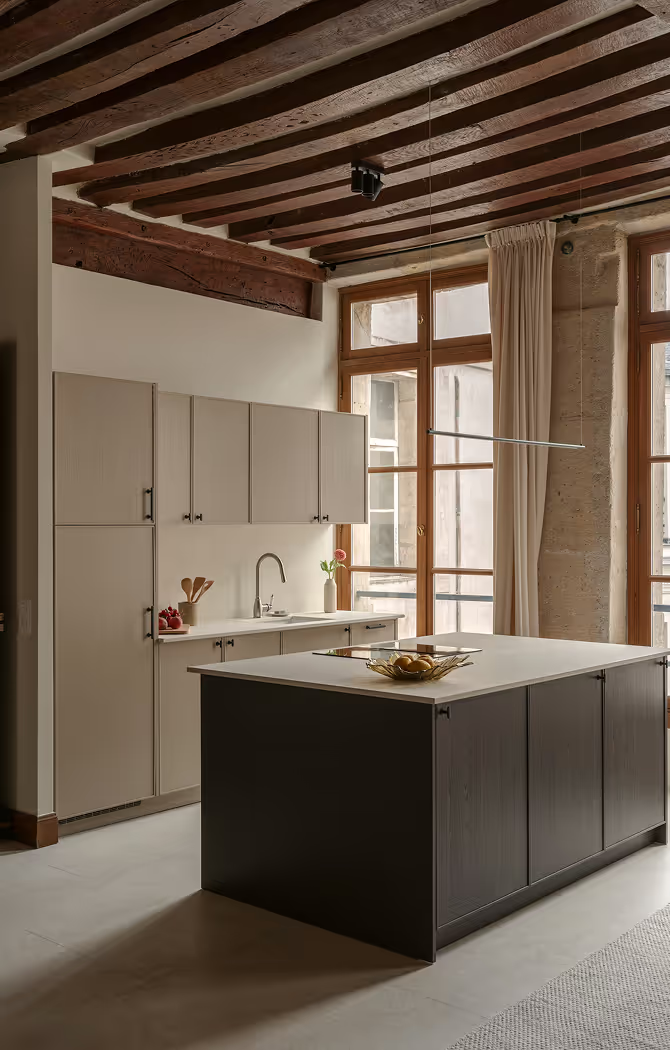
The kitchen island, a first in August’s Paris apartments, became one of Julie’s favourite details.
“The kitchen was smaller so the island added both storage and sociability. But it was important not to drown the space in beige. With the light walls, stone, and tiled floors, it risked feeling too monotone. So we grounded the island in a darker tone, which made everything else feel more balanced.”
This balance, of calm surfaces and confident accents, gives the flat a distinctly Parisian quality: elegant, feminine, romantic, yet contemporary. It also reflects the way Parisians live, kitchens here are often compact, designed as much for gathering as for cooking, and always infused with a sense of style.
Paris Apartment vs. Villa: A Different Rhythm
For August, one of the most distinctive aspects of the Pied-à-Terre Collection is how each home reflects not only its architecture and place, but also its lifestyle. The rhythm of a Paris apartment is worlds apart from a villa in the South of France.
Julie explains: “In a city apartment, the living space has to work harder. The kitchen, dining, and lounge often share one room, and you know most people will eat out anyway. So you prioritise the social living aspect, somewhere to gather after exploring the city. That’s where the lounge becomes the central character, and everything works around that. In a villa, the kitchen becomes the heart. Everyone cooks and eats together because you’re not going out every night. It’s a completely different pace of life, and the interiors reflect that.”
That contrast is visible not just in layout but in design language. In Paris, Julie leans on materiality and subtle contrasts rather than heavy patterns, creating interiors that feel lighter, more dynamic, and attuned to the faster rhythm of city life. In the South, the choices become slower, more relaxed: natural linens, softer palettes, spaces designed for lingering rather than rushing.
“Everything should visually reflect how you want to live in each home,” Julie notes.
By designing each home for the life it will hold, it ensures no two projects feel the same. A Paris apartment is not mistaken for a Provençal farmhouse, and vice versa.
A Parisian Home, Not a Cliché
When asked what makes a Parisian home truly Parisian, Julie doesn’t mention gilt mirrors or chandeliers. Instead, she points to subtler elements: timber floors, heavy curtains, light walls, and carefully chosen fabrics.
“Paris isn’t always about heavy patterns,” she says. “It’s about materiality. That’s what makes it romantic and elegant.”
In this Marais apartment, that romance comes not from clichés, but from listening: to the beams, to the stone, to the antiques collected along the way. It is a dialogue between past and present, a home that carries the soul of its quartier into modern life.
And in that, it becomes exactly what a Paris apartment should be: unmistakably of its place, and impossible to imagine anywhere else.

Your Paris Chapter
Every August home begins with a story of place, its rhythm, its architecture, its soul. If you can imagine your own Paris chapter unfolding here, book a call with us today to explore how ownership in the city works.


Tucked behind a quiet courtyard in the Marais, this 17th-century apartment is the kind of Parisian secret you could pass by without ever knowing it existed. Unlike the grand Haussmannian boulevards most people picture when they think of Paris, the Marais tells a different story: older, more intimate, layered with centuries of Parisian life. When interior designer Julie Tysseire-Torres first stepped inside, she felt it immediately. “That apartment was quite unique,” Julie recalls. “It had so much character still intact, the beams, the stone walls, even the shelves the previous owner, an antique dealer, had built around the fireplace. You don’t often see apartments in the Marais that remain so original. It really felt like it had its own soul.” For Julie, that soul became the starting point. Rather than impose the ornate mouldings or grandeur more typical of central Paris, the renovation was guided by a quieter principle: let the building’s history lead the design.
join the conversation
Fill in the form below to secure your space
Details to join the virtual event will be sent by email.
Discover August, the concept and how you can become a Homeowner.
Learn about our Collections and experience some of the homes
Understand the process to join
And all of your questions answered
RSVP to save a spot. The details to join the virtual event will be sent to you shortly.

1. Introduction to the August
concept
Discover more about August, our unique co-ownership model and how you can become a Homeowner
2. Homes & Collection
Learn about our unique types of Collections, our homes and which Collection suits you
3. From a house to a home
Hear from Homeowners, who will be sharing their experience and help to answer your questions
request a brochure
Begin your journey to second homeownership by arranging an introductory call with a member of our expert team.